Early in 2016, I launched a literary movement known as Method Writing, which applied the techniques of method acting to writing stories. I wrote a manifesto. I gave classes. I spoke about it on the Today programme. It didn’t really catch on. The literary editor of The Independent summed it up when she described it wryly as a one-man literary movement.
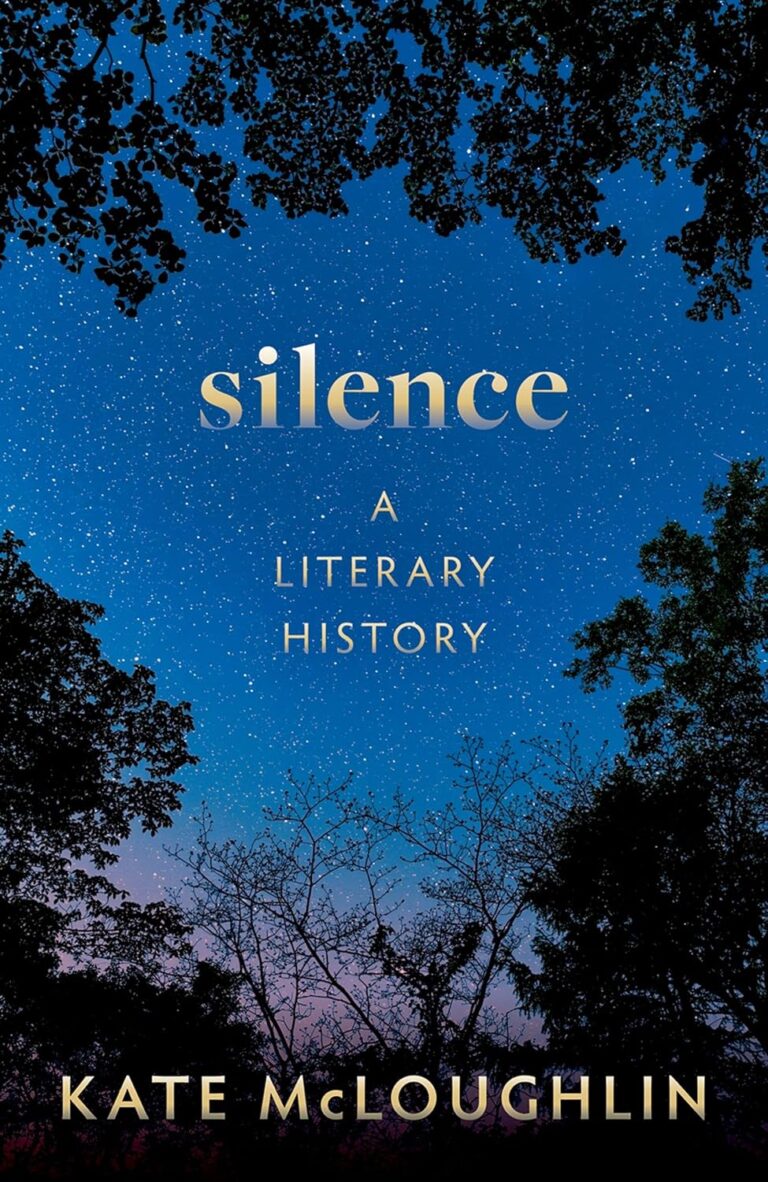
Yet among the many fascinating things I have learned from this erudite new book from Oxford English professor Kate McLoughlin is that the Method Writers are in good company in one respect at least: we share our interest in the things a writer chooses not to say with Jean-Paul Sartre and Ludwig Wittgenstein. Sartre once observed that all writers should be asked why they have written about this and not that. As for Wittgenstein, he declared that his Tractatus was really two books: what he had written and what he had not written.
Once you start looking for silences in literature, you find them everywhere. This is especially true if you keep a loose definition. A narrower approach might have restricted itself to descriptions of absolute silence, but McLoughlin includes near-silences, wordlessness (as opposed to noiselessness), silent authors, silent characters, and everything in between. Proceeding chronologically, her book opens with chapters devoted to medieval lullabies, which are words designed to instil silence; tongue-tied lovers from Chaucer to Crompton; silences in Shakespeare; the silences of monks and recluses; the quiet style of the Scientific Revolution; and the silencing effect of the sublime—the scale and majesty that robs men of the power of speech.
I had a similar reaction, actually, when reading McLoughlin’s book. As I gazed, like stout Cortez, on her hundreds of pages, I found myself wondering where it was going to end. There’s a lot to get through, some of it couched in an academic style that doesn’t always like to tell you what it means. Yet there are playful moments, too, and autobiographical revelations that are especially welcome to readers not doing an undergraduate degree. Personally, I gained more from McLoughlin’s close readings than from her longer view. After the death of Little Nell, she beautifully notes, Dickens offers refuge in the stately calm of an iambic pentameter: “Her solemn stillness was no marvel now.” In a short story by Virginia Woolf, the entire course of the First World War is represented by three asterisks. “They look like perforation marks,” McLoughlin observes, “as though the page could be torn in two.”
Broader theses, though, are more hinted at than spelled out. One overarching idea might have been to present the whole history of literature as a kind of war against silence, which has produced a range of techniques for exteriorising the inner voice. This goes back to Homer, whose hero Odysseus talks to himself at rare moments requiring supreme self-control. It has taken in the stagey conventions of Hamlet’s asides and soliloquies. And it reached perfection with Joyce’s stream-of-consciousness, which articulates the silent riot in the soul of the ordinary man.
Around the same time as Joyce was taking this as far as it would go, the Danish psychologist Edgar Rubin developed his ambiguous image of a white vase, which, viewed in a different way, could be two black faces looking at one another. Soon afterwards, Ernest Hemingway pioneered his “iceberg theory” approach to fiction, whereby a story takes its power from what is not said—not unlike the method actor, whose preparation isn’t shown but felt. Hemingway was, in this sense, a Method Writer before the fact.
In her final chapter, McLoughlin once again reveals her sensitivity to silences, when she notes that “Readers may pounce on what isn’t in this book. All those eighteenth-century novels. Early modern drama; centuries of drama, in fact. Post-1945 fiction. This list is incomplete, too.” Then she quite rightly adds that her book “constitutes a polite nudge”, as all books do, to motivate readers to have their own thoughts and embark on their own intellectual adventures. This is, after all, an aspect of one of the most magical experiences any reader can have—when you really get into a book and seem to part company with the words, gliding, as it were, a hair’s breadth above them. When that happens, you cross over from Rubin’s white vase into the two faces silently looking at one another, and learn, in the process, that in the history of literature there has been no better writer than your own imagination.